


Table of Contents
- Step 1: Read the Recipient Before You Shop
- Step 2: Match the Gift to the Occasion and Milestone
- Step 3: Decide Between Experience-Driven and Physical Gifts
- Step 4: Choose Meaningful Gifts for Mom 2026
- Step 5: Learn How to Write a Heartfelt Birthday Card
- Thoughtful Gift-Giving Etiquette: Budget, Timing, and Follow-Up
- Common Mistakes That Turn a Meaningful Birthday Gift Sour
- Conclusion
- Frequently Asked Questions
Last Updated: September 11, 2026
Step 1: Read the Recipient Before You Shop
Learning how to choose a meaningful birthday gift starts with observation, not shopping. The most thoughtful presents come from paying attention to what someone already loves, mentions, and struggles with in daily life.
This guide from Treasure Charms walks through a repeatable seven-step process, from reading subtle clues to writing a card that lands.
The biggest mistake is treating the gift as the goal. The gift is only the messenger. Your real job is proving you noticed something specific about the person, and that takes quiet observation before you ever open a browser tab.
Listening for Clues Without an Interrogation
Direct questions rarely work. Ask someone what they want and you'll get a polite non-answer, or worse, they'll guess what you can afford and downsize their own wish.
Listen sideways instead:
- What do they complain about repeatedly? That's a problem-solving gift waiting to happen.
- What do they pause on in a store or scroll past twice online? That's a preference signal.
- What do they mention wanting to try but never justify buying for themselves?
- What's wearing out? A cracked phone case, a dead watch battery, a favorite mug with a chip.
A common mistake is waiting until the week of the birthday to start paying attention. Observation works best over weeks, not days. Start a running note in your phone the moment you hear something worth remembering.
Step 2: Match the Gift to the Occasion and Milestone
A gift that fits a casual dinner can feel wrong at a milestone birthday, and vice versa. Match the weight of the gesture to the weight of the occasion.
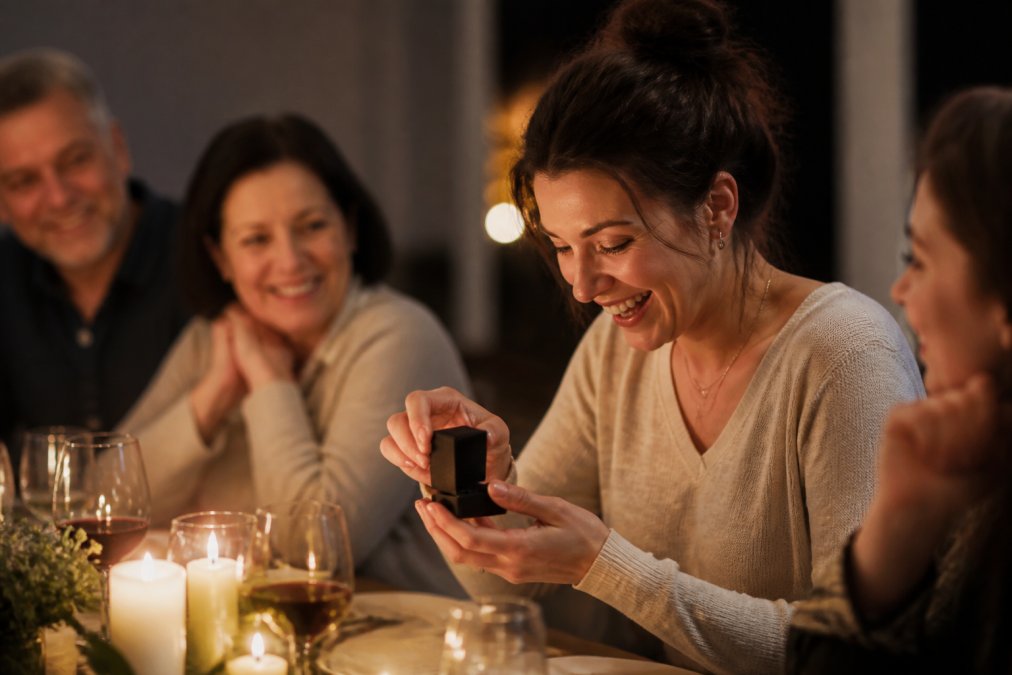
Here's how the thinking shifts across common milestones:
| Milestone | Gift Weight | Good Direction |
|---|---|---|
| Casual birthday | Light, fun | Consumables, small everyday items |
| Milestone (30th, 40th, 50th) | Reflective | Keepsakes, personalized jewelry |
| First birthday away from home | Comforting | Something that connects them to family |
| Retirement | Celebratory | A piece tied to their next chapter |
Step 3: Decide Between Experience-Driven and Physical Gifts
Experience-driven gifts create memories; physical gifts create lasting reminders. Neither wins by default, and the right call depends on the person. But the reason this decision feels so hard is rarely about the recipient's preferences. It's about the giver's own anxiety.
The Gift-Giving Anxiety Framework
Most guides tell you what to buy. Almost none address why choosing feels so stressful in the first place. That stress has a name in social psychology: evaluation apprehension, the fear that a gift will be read as a verdict on how well you know the person (peer-reviewed research). When you hand over a gift, you're handing over evidence. That's why a $30 present can feel heavier than a $300 one.
A useful pattern for defusing that anxiety is to separate the gift into three jobs and check which one is actually causing the stress:
- The signal job, does this prove I noticed something specific? (Identity and attention.)
- The utility job, will they actually use it? (Practicality.)
- The ritual job, does it mark the moment in a way they'll remember? (Occasion.)
When a gift fails, it's usually because the giver optimized for the wrong job. A beautifully wrapped, deeply personal item that solves no problem fails the utility job. A practical gadget with no story fails the signal job. Naming which job matters most to this recipient, and to you, collapses the anxiety into a single question.
Choosing Between Experience and Object
Someone who values anticipation and storytelling will remember a concert or a trip far longer than an object (PubMed). Someone who treasures sentiment and utility may prefer a tangible keepsake they can hold every day. A common pattern: people who already keep journals, photo albums, or collections lean toward physical keepsakes, while people who document trips and events on their phones lean toward experiences.
Three trade-offs worth weighing honestly:
- Experiences have a shelf life. A concert ends. If the recipient is the type who wants a reminder on their desk every morning, an experience alone may feel like it evaporated.
- Objects can become clutter. If the recipient is actively decluttering or lives in a small space, a physical gift carries a hidden cost.
- The hybrid usually wins. A physical item that anchors an experience, a personalized charm given before a trip, a photo book assembled after a milestone dinner, combines the memory and the reminder. For sentimental adults, that combination tends to outperform either category alone.
A Quick Decision Test
Before you commit, run the gift through this filter:
- If they lost this item tomorrow, would they replace it? (If no, it's probably clutter.)
- If they described this gift to a friend, would the story be about the object or about you noticing them?
- Does the gift require them to change a habit to enjoy it?
If the answers point in different directions, the hybrid option, a small physical anchor tied to a shared experience, is usually the safest bet.
Step 4: Choose Meaningful Gifts for Mom 2026
Meaningful gifts for mom 2026 lean toward keepsakes that carry names, dates, and family history. The category has moved away from generic flowers and toward pieces she can wear or display that tell her own story back to her.
When choosing for a mother or grandmother, focus on what she'd never buy for herself. Customization turns a nice object into a personal one. A name necklace, for example, carries a child's or grandchild's name and becomes a daily reminder of the people she loves.
Treasure Charms offers a Classic Heart Style Name Necklace at $39.95, a piece that suits a milestone birthday or Mother's Day because the personalization makes it unmistakably hers. If you want something more understated, the Classic Vertical Name Necklace at $54.95 works the same way with a cleaner line.
Both are designed, assembled, and shipped from a USA factory, which matters if you want a keepsake that feels considered rather than mass-produced. Our team also fields the question every custom shopper asks: how do you make sure the spelling is right before it ships? Personalization details are confirmed before production, so a typo doesn't become a permanent one.
Step 5: Learn How to Write a Heartfelt Birthday Card
A heartfelt birthday card names a specific memory, not a general feeling. "Happy birthday, love you" is forgettable. "I still think about the summer you taught me to ride a bike" is not.
Here's a fill-in template you can adapt:
"[Name], happy birthday. I keep thinking about [specific shared memory], and how [what it meant to you]. Watching you [recent growth or quality you admire] this year has been [your honest reaction]. I hope this [gift] reminds you of [the connection you share]. With love, [your name]."
Three rules make it work:
- Lead with a memory, not a compliment.
- Keep it to four or five sentences. Longer isn't deeper.
- Tie the card to the gift so the two feel like one gesture.
Thoughtful Gift-Giving Etiquette: Budget, Timing, and Follow-Up
Thoughtful gift-giving etiquette comes down to three things: spend within your means, deliver on time, and follow up after. None of these require a big budget, and all three matter more than the price tag. The third one, follow-up, is where almost every guide stops short, and it's the step that turns one good gift into a pattern of good gifts.
Budget Without Signaling It
Set a budget before you shop, not after. A budget-friendly gift chosen carefully beats a luxury item chosen randomly. If money is tight, an experience or a handmade keepsake carries the same emotional weight as something expensive.
The etiquette trap isn't spending too little, it's spending in a way that makes the recipient feel indebted. A gift that clearly cost more than the relationship warrants creates pressure, not warmth (peer-reviewed research). A useful rule of thumb: the gift's weight should match the relationship's weight, not your bank account's. If you're unsure, err slightly under rather than over.
Timing Signals Respect
Order custom pieces early, because personalization adds production time. If you're ordering close to the date, confirm turnaround before you commit rather than assuming a rush option exists. A gift that arrives three days late is remembered as the lateness, not the thought.
The Post-Gift Follow-Up Loop
This is the step competitors skip. After the birthday passes, you have a short window to learn whether the gift actually landed, and most people waste it by asking the wrong question.
Don't ask: "Did you like it?" That question invites a polite yes and teaches you nothing.
Do ask: "Have you had a chance to use it?" or "Did it fit the way you hoped?" These are behavioral questions. They surface real information: whether the item is in rotation, whether the size was wrong, whether it's still sitting in the box.
A simple three-signal read, roughly a week after giving:
- In rotation. They mention using it, wearing it, or displaying it unprompted. Strong hit.
- Polite acknowledgment, no detail. They thanked you and moved on. Neutral, the gift may be fine but not memorable.
- Silence or a subject change. Likely a miss. Don't probe. Note it and adjust next year.
How to Handle a Miss Gracefully
A miss is not a failure of the relationship. It's data. If the recipient hints the item isn't right, wrong size, wrong style, already owned, the graceful move is to make the exchange easy and unemotional. Offer to swap it, keep the receipt accessible, and don't make them perform gratitude for something that didn't work.
The worst response to a miss is defensiveness. "But I thought you'd love it" turns the recipient's honesty into your hurt feelings, and it guarantees you'll get less honest feedback next time. The best response is a light "Let's get you the right one" and a mental note about what you misread.
Build a Feedback File
Keep a simple note of what you gave and how it landed. Two lines per person, updated yearly, turns guesswork into a pattern. Over three or four birthdays, you'll start to see which categories consistently hit, and which ones you keep getting wrong for the same reason.
Common Mistakes That Turn a Meaningful Birthday Gift Sour
Even a well-intentioned gift can misfire. These are the mistakes that show up most often, and how to sidestep each one.
- Gifting what you'd want, not what they'd want. Your taste isn't their taste. Anchor every choice to something they've actually shown interest in.
- Over-personalizing. A name is meaningful. A paragraph of text engraved on a small item is clutter.
- Ignoring practical utility. A beautiful object that solves no problem and fits no routine often ends up in a drawer.
- Making the gift about you. If the story you tell when giving it is longer than the recipient's reaction, the gift was for the wrong person.
- Skipping the card. The gift shows effort; the card shows you know them.
The throughline across all five: the recipient's preferences lead, your preferences follow. Get that order right and the gift usually lands.
Conclusion
Choosing well isn't about spending more. It's about noticing more, then matching the gesture to the person and the moment.
When you want a keepsake that carries real meaning, Treasure Charms builds personalized pieces designed, assembled, and shipped from a USA factory, backed by a 100% customer satisfaction guarantee and a range of options for the people you love most. Add our Gift Wrap with Personalized Message at $7.95 to complete the gesture.
Get started with Treasure Charms and give a birthday gift they'll keep for years, not weeks.
Frequently Asked Questions
What makes a birthday gift truly meaningful?
A meaningful birthday gift shows you noticed something specific about the recipient, not just the occasion. That can be a hobby, a milestone, or a shared memory. Practical items they will use daily often land harder than flashy ones. A personalized keepsake, like a name necklace, adds an emotional connection because it exists only for them. The gesture matters more than the price tag.
How do you choose a gift for someone who has everything?
Skip the object and give a moment. A curated experience, a handwritten letter, or a customized keepsake tied to a shared memory works better than another gadget. For meaningful gifts for mom 2026, consider something she would never buy herself, like a personalized charm or a framed photo from a family trip. The goal is sentiment, not utility.
How can I make a store-bought gift feel more personal?
Add a layer that only you could provide. Pair the item with a heartfelt birthday card that names a specific memory, or have it customized with a name, date, or short message. Gift wrapping with a personalized note, like the option from Treasure Charms for $7.95, turns a generic purchase into a curated gesture. The customization is what makes it feel chosen, not bought.
Is it better to give an experience or a physical gift?
It depends on the recipient's preference, not yours. Experience-driven gifts suit people who value time together or novelty. Physical gifts, especially durable or personalized keepsakes, suit people who like tangible reminders. If you are unsure, combine them: a small personalized item plus a planned outing. Observational skills beat guesswork here.


